One of the brightest stars of the 2003 Rugby World Cup, Rupeni Caucaunibuca, has revealed how he’s now penniless, despite being one of rugby’s highest-paid players at his peak.
Living in Fiji, Caucaunibuca admitted he squandered his wealth on alcohol and handouts, leaving him with nothing to show for a once-glittering career.
Join the RUCK’s WhatsApp community here and get the latest news sent straight to your messages.
The Rise and Fall of a Rugby Icon
Caucaunibuca burst onto the scene 16 years ago, dazzling fans and scouts alike with his performances during the World Cup. The winger’s electric pace and raw power earned him lucrative contracts in France, making him one of the most sought-after players on the planet.
But by 2019, he confessed in a short documentary, Oceans Apart, for the Pacific Rugby Players’ Welfare organisation, that his fortune had vanished.
“I just used it for nothing”
Reflecting on his financial mismanagement, Caucaunibuca, now 38, said:
“I just used it for nothing. I spent it on drinking and helping people.”
He openly expressed regret for his actions:
“I should have kept a few hundred thousand for after rugby. But it’s too late, I’ve already spent it all, for nothing.”
A Hard Lesson Learned
Caucaunibuca revealed how his rapid rise from humble beginnings left him unprepared for life as a professional athlete:
“No-one taught me when I started. Straight from my village, I ended up a big rugby star.”
His story serves as a cautionary tale for athletes navigating fame and fortune, highlighting the importance of financial education and planning.
“In one year, from my village to Suva, Suva to the Fiji team, and then New Zealand. No-one taught me to do this or do that.”
He continued: “At that time, nobody taught you how to spend your money. We didn’t think about life after rugby finished. We thought rugby would continue until… I don’t know. You don’t think it will come to an end. You don’t know what injuries you could have. I stopped because I had a lot of injuries.
“I spent my money on people who didn’t have it. People in the street. People without fathers, single mothers who needed help. Sometimes in France people are homeless in the street. I didn’t give them 100 dollars, sometimes I gave them 5,000 dollars. I gave it from my heart.
“Sometimes people are very kind to you on the outside but hate you on the inside. I didn’t want to have my chest puffed out, I just wanted to be humble because I grew up in the village, I knew the village ways, I struggled in the village. I don’t like living in the city. You can share food with your neighbours every day in the village, you can help each other, but in the city it is just you, no-one else. Everything is money.”
Watch the documentary here:
EDITORS PICKS:
- Andy Farrell steps down as Ireland boss, replaced by former British & Irish Lion
- Nigel Owens Names the Worst Rugby Players to Referee
- Baby Alert! Liam Williams Welcomes First Child with Adorable Name Choice
- Peter O’Mahony has confirmed his retirement from rugby, he’s not changing his mind
- Jason Leonard’s Ultimate Boozing XV Is as Legendary as It Is Hilarious
What England’s 2003 Rugby World Cup heroes look like now, some are very different
Sir Clive Woodward’s England lifted the William Webb Ellis trophy for the first – and so far only – time in 2003, after a Jonny Wilkinson drop goal in extra time.
Woodward’s side are still the only northern hemisphere side to win the World Cup, with the other nine tournaments won by South Africa (four), New Zealand (three) and Australia (two).
In a video posted by England Rugby’s Instagram account, Wilkinson – who scored the all important drop goal 28 seconds from time – said: ‘It’s great being back with all the guys from the squad 20 years on.
‘It’s great to be able to see everyone, and to get a feel of what everyone’s been up to, but also to I guess get a feel for why we were able to do what we did 20 years ago, because it still lives on in everyone.’
Take a look at how some of the key players look now:
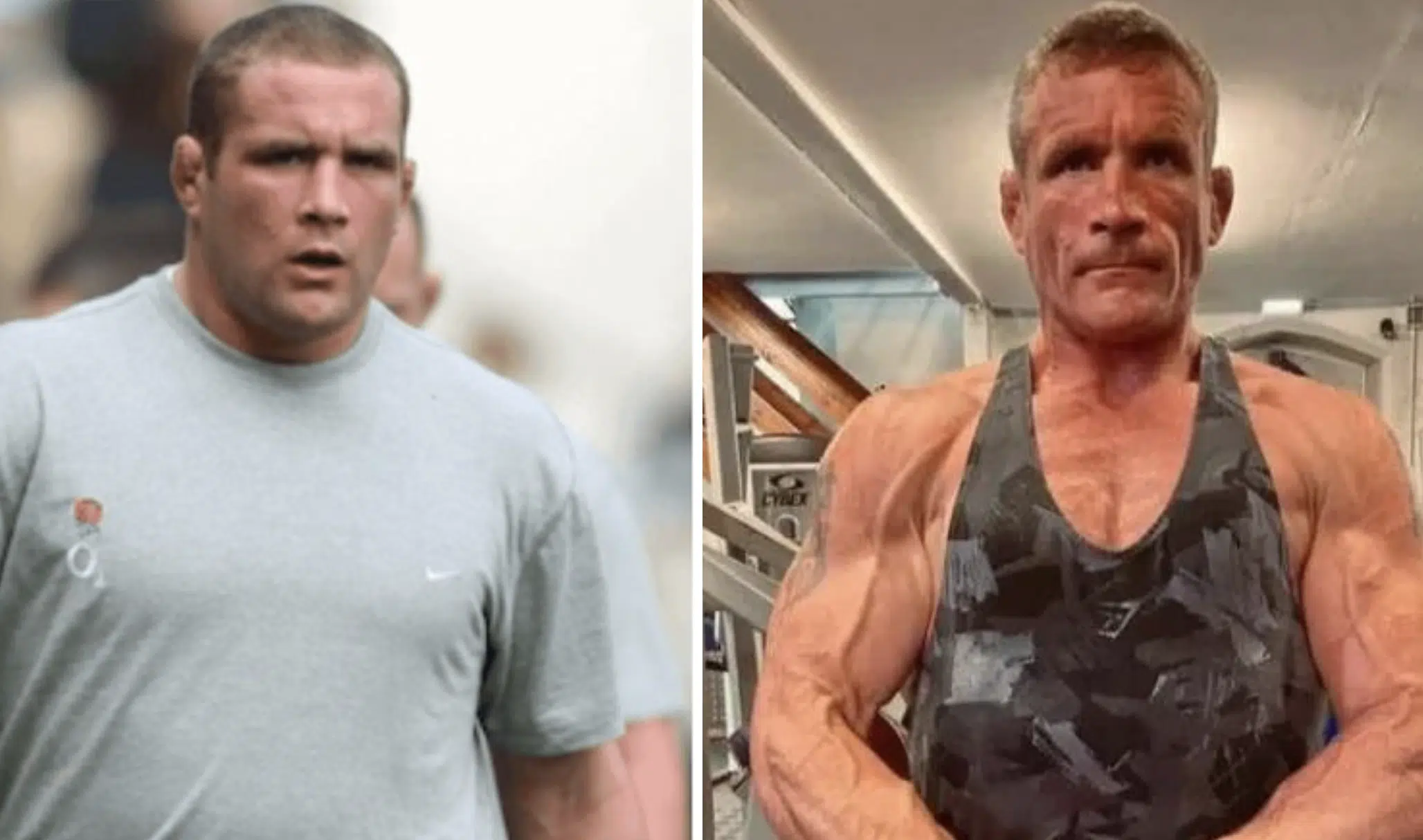
Phil Vickery
A former Gloucester and London Wasps prop, Phil Vickery called time on his career at the end of the 2010 Premiership season. The two-time British & Irish Lion was a revered opponent across the world, and has since started a successful clothing brand ‘Raging Bull’, with his on-field nickname. Vickery was forced into retirement due to a series of neck injuries, and in 2012 he joined Worcester Warriors as their Scrum Coach.
Vickery has also tried his hand at sports broadcasting, as he was apart of the commentary team for the 2011 Rugby World Cup in New Zealand. His on-screen appearances have also been witnessed across a variety of TV shows, including ‘Celebrity MasterChef’, which he won in 2011. An eternal fan favourite at Kingsholm Stadium, Vickery was appointed the title of Deputy Lieutenant of Gloucestershire in 2015.
Jonny Wilkinson
Renowned for his iconic drop-goal that secured victory against Australia in the 2003 final, Wilkinson transitioned into a coaching role with Toulon, focusing on kicking and skills development following his retirement. He also now works as a pundit for ITV Sport during Rugby World Cup’s and the Six Nations.
Will Greenwood
Greenwood continued to shine on the international stage following the 2003 glory, and went on to represent the British & Irish Lions for their 2005 tour to New Zealand. He ended his career at Harlequins in 2006, and soon gave his experienced views through analysis and punditry. Greenwood co-hosted the ‘School of Hard Knocks’ TV series with former Wales international Scott Quinnell, and was an on-screen analyst for ITV as England reached the final of the 2007 Rugby World Cup.
Will has also explored opportunities away from rugby, and is the current Chief Customer Officer for data and software company Afiniti’s London office. Greenwood’s family was struck with tragedy, after his son Freddie died just 45 minutes after being born. The former England centre underwent an inspirational walk to the North Pole in memory of his son, and helped to raise over £750,000 for Borne’s research. Greenwood is a patron of Borne, who are a medical research charity that work with cases of premature birth. He is also a patron of Child Bereavement UK, which is a charity that support parents who have lost a child.
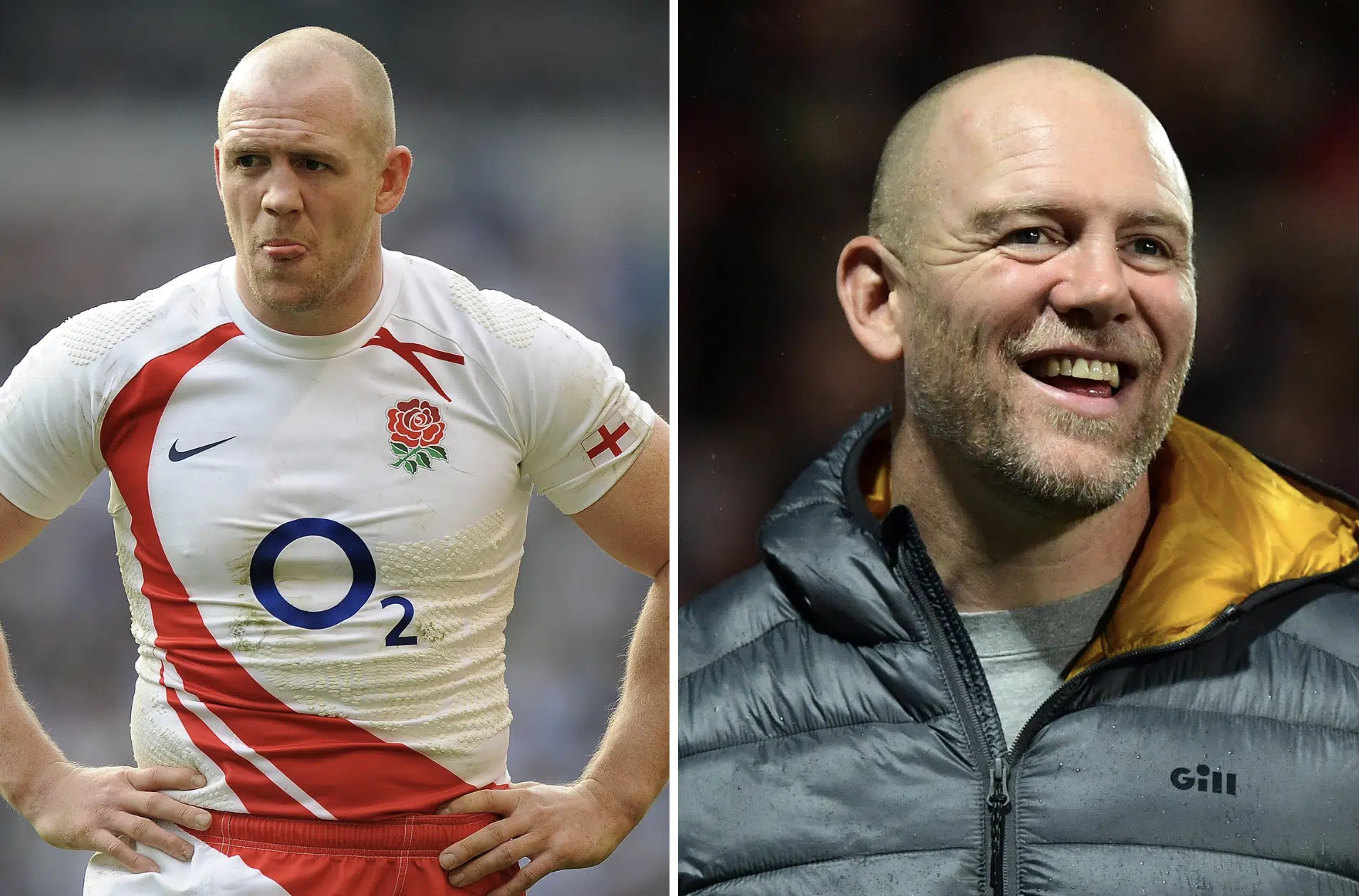
Mike Tindall
Tindall, who earned an impressive 75 caps for England, held the distinction of being the final player from the 2003 squad to retire when he bid farewell to his playing career in 2014. Adding a touch of royalty to his life, he tied the knot with Zara Phillips, daughter of Princess Anne, in 2011.
Since then, he’s frequently spotted alongside royalty at various sporting events and public engagements, embodying a blend of athletic prowess and regal connections. He also presents The Good, The Bad, And The Rugby podcast.
Ben Kay
Kay amassed 62 caps for England throughout his eight-year international career, retiring in the summer of 2010. Since then, he has contributed as an analyst for various prominent broadcasters and held a role as a non-executive director at Leicester Tigers from 2014 to 2021.
Neil Back
The openside flanker for England in 2003 transitioned to coaching roles post-retirement, notably at Leeds Carnegie and Rugby Lions. His tenure culminated in leading an undefeated 2011/12 season with Rugby Lions in the fifth tier, securing both a league title and cup victory. His last full-time coaching position was at Edinburgh, concluding in 2013.
Lawrence Dallaglio
Dallaglio has followed in the footsteps of Wilkinson and Dawson, becoming a well-known rugby pundit. He provided coverage for the Rugby World Cup on ITV in 2011.
Additionally, he is renowned for his philanthropic efforts, having founded the Lawrence Dallaglio Foundation. This organisation aims to empower young people through sport and supports teenage cancer trusts by raising funds.
Ben Cohen
Cohen ended his rugby career with Sale Sharks, having previously also represented Northampton Saints and French club Brive. An inspirational activist, the former winger founded The Ben Cohen StandUp Foundation in 2011, which works on raising awareness regarding the impacts of bullying and implements “real-world work to stop it”. Cohen is an leading activist for LGBTQ+ rights, and in 2013 was inducted into the National Gay and Lesbian Sports Hall of Fame.
Due to having a hearing issue called tinnitus, Cohen is clinically deaf. He lacks approxmiatly 30% of his hearing in both ears, and he is a campaigner for increased accessibility within rugby for hard of hearing people. Cohen met his partner Kristina Rihanoff on TV show ‘Strictly Come Dancing’, and the pair have since had a daughter together. Cohen has appeared on numerous reality TV shows, including The Jump, The Celebrity Chase and has worked with charity Sports Relief.
Steve Thompson
Since retiring from playing, two of England’s victorious 2003 front-rowers have embarked on distinct paths. Hooker Thompson opted for a lifestyle change, relocating to Dubai. At 45 years old, he assumed ambassadorial roles for the Christina Noble Children’s Foundation and was appointed as a sports ambassador for Transguard, a security and facilities management services company.
However, Thompson’s journey took a poignant turn when he was diagnosed with early-onset dementia in December 2020. In a significant gesture, on September 23, 2021, he publicly expressed his desire to donate his brain for research into chronic traumatic encephalopathy (CTE).
Can you name the entire British & Irish Lions squad from their tour of New Zealand in 2005?
The British & Irish Lions’ tour of New Zealand in 2005 remains one of the most talked-about campaigns in rugby history.
Despite facing a formidable All Blacks side, the squad was packed with legendary talent representing England, Ireland, Scotland, and Wales.
From unforgettable tries to moments of controversy, this tour had it all—and it’s time to see just how much you remember!
Can you recall every player who pulled on the famous red jersey during that iconic tour? Dive into this quiz to test your Lions knowledge and relive a piece of rugby history!
